Customer Service Tips for Restaurant Owners

Customer service is one of the most powerful drivers of restaurant success. While food quality attracts first-time visitors, service quality determines whether guests return. In a competitive dining environment, restaurants that consistently deliver thoughtful, attentive service build stronger reputations, increase repeat visits, and generate positive word-of-mouth recommendations.
Restaurant owners who prioritize customer service create experiences that go beyond meals. They create environments where guests feel welcomed, valued, and understood. Strong service culture influences every interaction, from the moment guests walk through the door to the time they leave the restaurant.
Understanding practical strategies that improve guest satisfaction helps restaurant owners strengthen both daily operations and long-term business growth.
Why Customer Service Matters More Than Ever
Guests today expect more than efficient service. They want comfort, personalization, and reliability.
Excellent customer service helps restaurants:
- Increase repeat visits
- Build customer loyalty
- Strengthen online reviews
- Encourage referrals
- Improve staff morale
- Increase average spending per visit
Restaurants that invest in service training often outperform competitors even when menu prices are similar.
Create a Strong First Impression at the Entrance
The guest experience begins before the first dish arrives. The entrance sets expectations for everything that follows.
Effective first impressions include:
- Friendly greetings within seconds of arrival
- Clean entryways
- Organized waiting areas
- Clear communication about wait times
Hosts should make eye contact, smile naturally, and acknowledge guests immediately, even during busy periods.
Guests who feel welcomed at the door are more likely to enjoy the rest of their visit.
Train Staff to Communicate Clearly and Confidently
Communication is one of the most important service skills in any restaurant environment.
Servers should confidently explain:
- Menu items
- Ingredients
- Preparation methods
- Portion sizes
- Special offers
When staff understand the menu well, they guide guests toward satisfying choices and reduce ordering uncertainty.
Confident communication also builds trust between staff and customers.
Encourage Genuine Friendliness Instead of Scripted Service
Guests quickly recognize when service feels forced. Authentic interaction creates stronger emotional connections.
Encourage staff to:
- Speak naturally
- Listen carefully
- Use guest names when appropriate
- Respond thoughtfully instead of rushing conversations
Personal attention helps guests feel respected rather than processed.
Authenticity is often the difference between good service and memorable service.
Maintain Consistency Across Every Visit
Consistency builds reliability. Guests return to restaurants when they trust the experience will match their expectations.
Consistency should apply to:
- Greeting procedures
- Order accuracy
- Food timing
- Table cleanliness
- Staff attentiveness
Restaurant owners should regularly observe service flow to ensure standards remain stable during both busy and quiet periods.
Reliable service strengthens long-term customer relationships.
Respond Quickly to Guest Needs During the Meal
Attentive service does not mean constant interruption. It means recognizing when guests need assistance.
Servers should watch for signals such as:
- Empty glasses
- Finished plates
- Confused menu reading
- Requests for assistance
Responding promptly improves guest comfort without disrupting conversation.
Balanced attentiveness helps guests feel supported throughout their visit.
Handle Complaints With Professional Confidence
Even well-run restaurants occasionally face service challenges. How staff respond to complaints often determines whether guests return.
Effective complaint handling includes:
- Listening without interruption
- Acknowledging concerns respectfully
- Offering reasonable solutions
- Following up after resolving the issue
Guests appreciate honesty and effort more than perfection.
Restaurant owners should train staff to view complaints as opportunities to improve rather than setbacks.
Empower Staff to Solve Problems Immediately
Waiting for manager approval can delay solutions and frustrate guests.
Consider allowing servers to resolve minor issues such as:
- Replacing incorrect dishes
- Offering alternative menu options
- Providing small goodwill gestures
Quick solutions demonstrate respect for the guest’s time and experience.
Empowered staff often deliver faster and more confident service.
Maintain a Clean and Comfortable Dining Environment
Cleanliness strongly influences how guests evaluate service quality.
Important areas to monitor include:
- Table surfaces
- Floors
- Restrooms
- Entryways
- Service stations
Even excellent food cannot compensate for an uncomfortable environment.
Clean surroundings communicate professionalism and care.
Use Technology to Improve Service Efficiency
Modern tools help restaurants streamline operations and improve guest interactions.
Helpful technologies include:
- Digital reservation systems
- Table management software
- Mobile ordering tools
- Contactless payment options
These tools reduce waiting time and allow staff to focus more on guest interaction.
Efficiency improves both customer satisfaction and employee productivity.
Personalize the Guest Experience Whenever Possible
Small details often create lasting impressions.
Personalization strategies include:
- Remembering returning guests
- Noting dietary preferences
- Celebrating special occasions
- Offering tailored menu suggestions
Guests who feel recognized are more likely to become loyal customers.
Personalized service strengthens emotional connections with the restaurant brand.
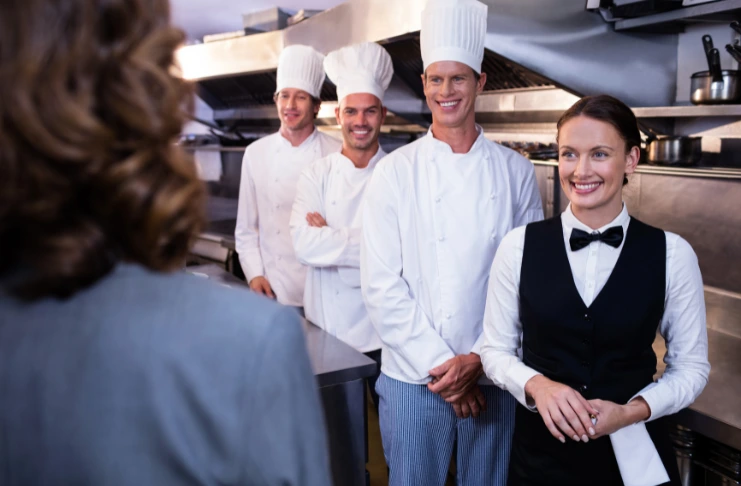
Support Teamwork Between Front and Back of House
Customer service depends on collaboration between service staff and kitchen teams.
Strong teamwork improves:
- Order accuracy
- Timing consistency
- Communication clarity
- Service recovery speed
Restaurant owners should encourage regular communication between departments to maintain smooth service flow.
When teams work together effectively, guests notice the difference.
Monitor Service Speed Without Sacrificing Quality
Guests expect meals to arrive within a reasonable timeframe. However, rushing service can reduce quality.
Balanced timing includes:
- Prompt drink service
- Reasonable order preparation time
- Efficient table clearing
- Timely check delivery
Monitoring service timing helps maintain a comfortable dining pace.
Restaurants that manage timing well create relaxed and enjoyable experiences.
Encourage Feedback From Guests Regularly
Customer feedback provides valuable insight into service performance.
Restaurants can gather feedback through:
- Comment cards
- Online reviews
- Direct conversations
- Follow-up messages after visits
Listening to guests helps identify areas for improvement and confirms what works well.
Feedback-driven adjustments strengthen service quality over time.
Invest in Ongoing Staff Training Programs
Customer service skills improve with practice and coaching.
Training topics should include:
- Communication techniques
- Menu knowledge
- Conflict resolution
- Hospitality standards
- Time management
Regular training sessions help maintain consistent service quality even as teams grow or change.
Well-trained staff feel more confident and perform more effectively.
Recognize and Reward Excellent Service Performance
Positive reinforcement encourages staff to maintain high standards.
Recognition methods may include:
- Employee appreciation programs
- Performance incentives
- Public acknowledgment during meetings
- Career growth opportunities
Motivated employees often deliver stronger customer experiences.
Supportive workplace culture directly influences guest satisfaction.
Build a Customer-Centered Restaurant Culture
Customer service should be part of the restaurant’s identity rather than a checklist task.
Owners can reinforce service culture by:
- Leading by example
- Supporting staff during busy shifts
- Responding respectfully to guest concerns
- Encouraging teamwork
- Maintaining clear expectations
When service values become part of daily operations, consistency improves naturally.
Strong culture shapes both employee behavior and guest perception.
Follow Up After the Dining Experience When Appropriate
Maintaining connections after guests leave encourages loyalty.
Follow-up strategies include:
- Thank-you messages after reservations
- Loyalty program updates
- Invitations to special events
- Seasonal menu announcements
Continued engagement helps restaurants stay connected with their customers beyond individual visits.
Long-term relationships support sustainable business growth.
Final Thoughts
Customer service remains one of the most important factors influencing restaurant success. While menu quality attracts attention, thoughtful service creates lasting impressions that encourage repeat visits and positive recommendations.
Restaurant owners who invest in staff training, communication clarity, consistency, and personalized experiences build stronger relationships with guests. Over time, these relationships become the foundation of long-term reputation and growth.
Strong service culture transforms everyday meals into memorable experiences that guests are eager to revisit.
Frequently Asked Questions
How can restaurant owners measure customer service performance effectively
Owners can evaluate service performance through guest feedback surveys, online reviews, repeat visit rates, and direct observation during service hours.
What is the ideal staff-to-guest ratio for maintaining good service quality
The ideal ratio depends on service style, but many full-service restaurants aim for one server per three to five tables during peak periods.
Should restaurant owners personally interact with guests during service hours
Yes, owner visibility often improves guest confidence and demonstrates commitment to hospitality standards.
How can restaurants maintain service quality during peak hours
Clear role assignments, pre-shift planning, and strong communication between teams help maintain consistency during busy periods.
Do uniforms influence customer perception of service quality
Yes, clean and professional uniforms contribute to trust and reinforce the restaurant’s brand identity.
How important is body language in restaurant customer service
Positive body language such as eye contact, attentive posture, and calm movement significantly improves guest comfort and communication clarity.
Can loyalty programs improve customer service outcomes
Loyalty programs encourage repeat visits and provide opportunities for personalized engagement that strengthens long-term guest relationships.